Monday, May 17, 2010

Evolution of the Sash Window


The sash window has been the most common window for residences since the 1800s. They are called sash windows because of the movable panels that hold the glass. These frames are called sashes, and are separated from other movable panels by muntin. Although any window with independent frames is a sash, the term sash window usually refers to glazed panels that open vertically. Horizontal sashes are called Yorkshire light sliding sashes. They have the counterweights hidden in a box case. The oldest known examples of a sash window were found in the 1600's in England. Supposedly the English scientist Robert Hooke created the first counterweight window.

Sash windows are a staple of Victorian houses where the classic arrangement has the panes arranged in two 3x2 sashes which comes out to 6 total panels. In the Edwardian and Georgian eras, English suburban houses were built with standardized windows. These windows are hundreds of years old, so they cannot compete with modern windows in terms of stopping drafts. Even the most well built Victorian window is probably so old that it needs help from a Denver windows company. Luckily these standard sizes are 4 feet across, making a replacement window Denver a snap. Handmade units may have been more beautiful, but can come in any size.
One good thing about the old vertical sash windows is the sashes slide vertically throughout the weatherstripping, giving the window a large maximum ventilation area equal to half the total area. Each sash has its own set of springs and balances that will hold the window open at any point.

The counterweight is a heavy metal, usually cast iron or lead, concealed within the window frame. Modern replacement windows Denver have no counterweight, and their springs are housed within the metal frame. The counterweight is connected to the window by a sash cord. Ancient windows have a chain system which runs through a pulley and spring balance system at the top. Some sash windows can be fully opened on the side on hinges. In the US, these kinds of windows refer to double hung windows that have two independent pane assemblies that move up and down. Single hung designs are the same as double hung, except the top sash is stationary. Some exotic window designs typical of northern church steeples have triple and quadruple hung windows.
The frames are made of sealed softwood. Contact a glazer when trying to convert from a single to double hung design. Although these wooden sash windows are beautiful and historic, they have problems with water. Typically they will become damaged over time by rot, swelling and shrinking. This makes them poor insulators. The sliding mechanisms and counter weight cords can fray and cut. High maintenance is offset by easier cleaning because of the mobility of the sashes. These windows are best when open, not closed.

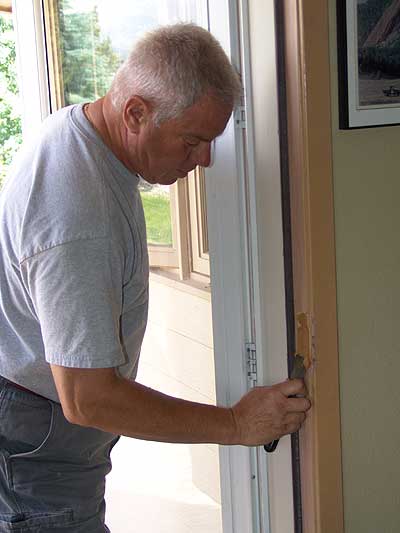
Sunday, May 16, 2010

Replacement vs Construction Windows


Replacement windows are made to fit an existing opening, while construction windows are designed to be built along with the frame. Many custom replacement windows Denver warehouses will have a window that fits your opening. There is not one standard size but dozens. Some available window frames are as small as a foot across to several yards. Wood is the most efficient, by vinyl, aluminum, and clad wood are more durable.

Even replacement windows can be broken down further. For minimal repairs, a sash kits replace an old frame's movable parts and jamb liners. The liners hold the sash for easy movement. This only works in a level, square frame in good condition. A warped window frame will receive no benefit from a sash replacement.

Insert replacements consist of a full frame that fits into your old opening. These ready to install frames make the window a bit smaller than before because it is like an extra frame with new jambs and liners. These replacement windows are sometimes called pocket windows by Denver windows companies.

Full frame replacement windows have a frame that comes complete with jambs and sill. This is the most complete option, and is the only thing to do if the frame is rotten or split. This is hardest kind of Denver windows to install because you must first strip the opening to its rough frame. Every frame will need to be shimmed. The shimming process not only centers the frame within the window opening, it also locks in the  frame in a plumb and level position. When working on the frame, make sure you are careful not to damage any of your air conditioning equipment's ductwork. A good air conditioning services company will work with any window contractor to make sure they do not conflict with each other's work.

Any small cracks or holes can be filled in with weather resistant wood putty. They can be sanded along with the the wood jambs in preparation of finishing through sealant or paint. If the frame is too cracked for putty, a full construction frame is required.

Step by Step Window Replacement

This article covers the tools and main steps required for a window replacement job. The main objects you will need to buy are: a replacement window Denver. It should be of slightly smaller size for easy mounting into the existing frame. You will also need weatherproof wood putty to patch any holes in the window frame. Polyurethane foam should be used to insulate the space around the window, but make sure it is of the minimally expanding variety or you will need to be careful about over-expanding warping the window frame.

Wood shims are used to plumb and level the window and snugly adjust its position in the window opening.Sandpaper smooths the window frame for finishing, whether that be by paint or sealant. Screws are needed to fasten the window to your studs. Insulating foam rods to fill any gaps between caulk and expanding foam.The window may need window stops if the old ones broke. Paint and primer are used to finish the frame.

If your window opening you want to put replacement windows in is still square, you can simply use a construction window from a replacement window Denver company. Vinyl windows are a good choice because vinyl needs minimum maintenance. For the full energy-economy effect, choose a vinyl covered wooden window with low-e insulated glass.

The first step before you can go grab replacement Denver windows is to measure what you are replacing. Use a slightly smaller window measured by the manufacturer's specifications.
Now you are ready for the actual removal. Take out the lifting sash. Then pry off the jamb liners and any trim. Prep the frame for installation by marking and placing all the connecting areas.

Remove the old sash weights. Modern windows have a simpler interior spring mechanism. This will leave an air space that must be filled if our new window is to do its proper insulating job. So next you need to prep and spray in insulating foam, being sure not to spray too much of the expanding substance. Then caulk between all moving parts.

Your next step is the installation of your replacement window.

This involves fastening it loosely in place while you shim the window to fit snugly plumb and level. To finish caulk, prime and paint your window.


Monday, January 11, 2010

Choosing A Denver Siding Company

Sometimes in life, a happy medium can be awfully hard to achieve. We either work too hard or don't work enough; we can't finish our supersized portions, but mere appetizers leave us hungry. Fortunately, when it comes to contractors who specialize in home improvements, there is such a thing as that happy medium: It's called the mid-sized company. As far as siding installation is concerned, choosing the right Denver siding company for the job can make a difference in the overall experience and result.

With so many retail giants offering discounted pricing and options galore, many homeowners are quickly drawn to the name on the store front and the advertising jingle that comes along with it. However, when it comes to siding installation, bigger is certainly not always better. The larger retail chains often come equipped with sales professionals who, on the surface, seem to know their stuff. But, in reality, they have simply memorized a script and perfected their daily sales pitch. Homeowners who choose to go with a bigger name tend to be disappointed by the subsequent lack of service throughout the actual siding installation process.
Another problem with the bigger guys is that they have a tendency to simply subcontract jobs such as siding installation and take a portion of the proceeds for profit. If you go with a larger company, then you run the risk that in many cases, the person who sold you a siding package won't know who will actually be showing up at your home to do the work. The unfortunate result is a Denver siding job that does not meet the homeowner's expectations.

Additionally, while the larger chains might advertise certain discounts, beware of the fine print. Since these retail giants are rarely starved for business, they are also less likely to negotiate a price with customers. Finally, many sales representatives are able to use the size of the business to their advantage, stating that discount requests can only be approved by the big boss. Unfortunately what ends up happening is the client ends up paying too much for their siding installation.

While smaller Denver siding companies might offer certain improvements over the retail giants, they also come with their own set of limitations. Sure, small businesses are known for their down to earth approach to sales and, at times, impeccable customer service. However, the problem with most "mom and pop" siding shops is that they often have too few resources at their disposal. In many cases, the person who schedules installation appointments is the same person who shows up to actually do the work. For this reason, smaller companies sometimes have a difficult time meeting project deadlines and offering convenient scheduling options.

Many medium sized siding companies have the ability to combine the best of both worlds for an ideal customer experience. Most medium-sized companies have enough resources to respond to customer requests and complete projects in a timely fashion. On the other hand, mid-sized companies don't have so many employees that they can't keep proper tabs on their people.

Since mid-sized siding companies tend to have a small number of educated customer representatives, they can offer personalized service without worrying about expending other resources. Medium-sized companies also tend to be the most flexible with pricing because they have more wiggle room than the smaller guys, but less demand than the larger guys. When a sales representative at a mid-sized siding company tells a customer that he needs to discuss pricing with his boss, that boss is usually only a notch or two higher on the flagpole. Finally, medium-sized companies can usually offer a customer discount in exchange for a flexible finish date, which is something that retail giants have little, if not zero, motivation to do.

Of course, not everything in life comes with that perfect happy medium. Fortunately for homeowners, siding companies are a welcome example of being just the right size for a job well done.

Various Types of Siding

The world of siding offers a variety of options for homeowners looking to maximize their property value and curb appeal. When it comes to choosing a material for siding, you'll want to pick something that works in terms of your taste as well as your budget. Each kind of Denver siding comes with its own distinct look and feel, so be sure to review all of the possible choices with your siding contractor before making this important selection. To get you started on the process, here are the types of siding available to homeowners today:

Vinyl Siding
Considered one of the more basic forms of siding, vinyl is one of the most affordable and easily maintainable materials on the market. Vinyl siding is available in a variety of colors and finishes, and its natural insulating properties make it a popular choice among homeowners looking to save some money on heating and cooling costs. On the other hand, vinyl is certainly not the strongest siding material out there. Strong winds and other such weather-related factors can cause vinyl siding panels to buckle, crack, or fly off, making repairs a likely factor down the line. Vinyl also has a way of looking a bit plastic-like, causing some homeowners to immediately cross it off as an option.

Wood Siding
Wood siding is an attractive option for people who happen to truly love the look of natural wood. While it might cost more than vinyl, it is certainly not the most expensive type of siding out there. However, wood comes with one major disadvantage in that it requires a lot of maintenance throughout the years. Wood is just one of those materials that is highly susceptible to weather damage and natural wear and tear. As a result, homeowners need to look at it as an investment that must be preserved with much time and effort.

Fiber Cement Siding
Fiber cement is a composite material that is meant to carry the same look and feel of wood, but without all of that pesky maintenance. Unlike actual wood, fiber cement siding won't warp or disintegrate over time, making it a more solid choice for homeowners looking for minimal hassle. However, homeowners should be advised that fiber cement offers nothing in the way of natural insulation.

Stucco Siding
Stucco is one of the classiest materials on the siding market. Available in both classic cement and a new synthetic form, stucco is a durable material that is relatively easy to maintain. Synthetic stucco is also one of the best insulators on the market, making it easier for homeowners to bear the cost of energy bills over time. On the other hand, stucco is one of the most expensive siding options, making it pretty much unattainable for homeowners on limited budgets.

Stone Siding
Stone siding is the ultimate material for exterior beauty and class. The elegance of stone siding makes it a popular choice among the elite. But with a sizable price tag, it's an option that only a small percentage of homeowners can afford. Additionally, those who opt for stone siding can forget about added insulation. Eye-catching as it may be, stone won't help one bit with energy costs.

Cedar Shake Siding
As one of the most appealing selections on the market, cedar shake siding creates a warm, inviting exterior that homeowners just tend to adore. Cedar shake siding is comprised of small cedar sections that are attached to the home in a shingled arrangement. While it's easy to fall in love with that natural look, the downside of cedar shake is that it does tend to fade over time. It is also a rather costly selection, making it less common than some of its more affordable counterparts.

Now that you're a bit more familiar with the various types siding materials, you should be in a much better position to start narrowing down your choices. Of course, it's one thing to simply describe all these Denver siding options, but it's another to actually see them in person. Before you make your final decision, be sure to take a look at examples of these materials in the form of finished products so that you can truly get a sense of how your home might come to be transformed. With any luck, you'll choose the perfect material for the look you've always wanted to achieve.

Ruben Jeruco is a writer for Yodle, a business directory and online advertising company. Find an extremely informative Guide to Siding or more Home Care articles at the Yodle Consumer Guide, The Yodler.

Monday, November 30, 2009

Different Types of Siding

There are numerous types of siding available for today's homes offering different advantages and/or disadvantages. Certain types of siding are more popular in some areas of the country than others, influenced largely by climate and availability of product. Price also influences the type of siding chosen by a builder or a home owner.

Types of siding available:
1. Aluminum or Vinyl Siding These siding options are available on new homes as well as often put on over older types of siding. The biggest advantage of this type of siding is that they do not require painting. The disadvantage is that aluminum siding dents and vinyl siding cracks. Vinyl siding has improved over time as the quality of vinyl improves.
2. Masonite Siding or Hardi Plank These siding options have a similar appearance but offer very different results. Masonite siding deteriorates over time and requires painting, caulking and routine upkeep. Hardi Plank (a brand name) is a similar looking product but is made of cement and therefore does not rot. It is growing in popularity and is a terrific alternative to Masonite.
3. Brick or Stone Both of these products provide an excellent siding option. They are virtually indestructible as well as attractive. They do not require the routine maintenance that other types of siding require. The biggest drawback is price, although in some areas of the country it is still very affordable.

4. Stucco Traditional stucco is made with cement and offers a solid, lasting, moisture proof siding. It is seen a great deal in Florida where the climate would require constant upkeep on other types of siding and the solid cement siding keeps the houses cooler than traditional siding.
5. Cedar Shakes For those who love the look of cedar shakes, it is an excellent alternative to Masonite siding as it requires less maintenance. When treated with stain it does not rot or peel.
6. Veneer & Synthetic Siding These siding alternatives give you the appearance of other types such as stucco or brick, but do not give you the quality or longevity.
7. Clapboard Siding that is made from solid wood is more costly than other types of siding but lasts longer and looks better than other manufactured sidings such as Masonite. It is also a product that lends itself well to stain and therefore will not peel as siding that is painted.
8. Steel and Vinyl Coatings These are becoming more and more popular. They are more expensive but are nearly indestructible thus requiring little maintenance. Vinyl Coatings are applied like paint but are much thicker. Since it is a relatively new product it is important to find a company that will apply it correctly as applying incorrectly can cause many problems.


Sunday, November 29, 2009

Types of Wood Siding


Wood siding types that are manufactured today are many which include, clapboard, plywood, shakes and shingles, tongue and groove and hardboard. Choosing a type of wood for your house is a big step. By matching the style of your home to a unique wood siding type you will be have a more desirable looking house at the end of the day. Read on to find out more about the unique types of wood siding available.
Clapboard siding are long planks of wood that are lain horizontally overlapping one another on the side of the house. A big plus for clapboard siding is that it complements any style of architecture. Redwood and cedar are the most preferred wood variety to be used for clapboard siding while fir and larch are acceptable too.

Plywood siding is another type that is easy to install using the most minimum basic carpentry skill. It is typically made from Western red cedar, Douglas fir, Southern pine and redwood, giving off a variety of patterns and textures to choose from. Plywood siding that is painted or stained regularly can last up to 30 years and more.

Shakes and shingles are like clapboard siding as they are able to fit into any architecture style. They have an attractive and rustic appearance and are also decay-resistant. This type of siding is made of cedar that can come in a number of grades. Depending on maintenance and climate, shakes and shingles can last from 20 to 40 years.

Tongue and groove siding are lengths of boards that fit and lock together in a pattern. It is made from pine, cedar and teak and is valued by its versatility and attractiveness. This type of wood siding can be installed horizontally, diagonally or vertically with either a rough or smooth finish. Depending on the style of the home, it can come in a knotty or clear appearance.

Hardboard siding is made of wood chips that are compressed to form sheets that are cut to style. Styles like lapboard, stucco, board or batten are available for this type of siding. It less expensive than solid wood siding but has a good durability and strength.

You are now ready to choose from the variety of wood siding types, one that is going to match the style of your house architecture.

At the end of this article, I'd like to share cool websites with more information on topics like Roofing Shingles and Stucco Estimate. Visit for more information.